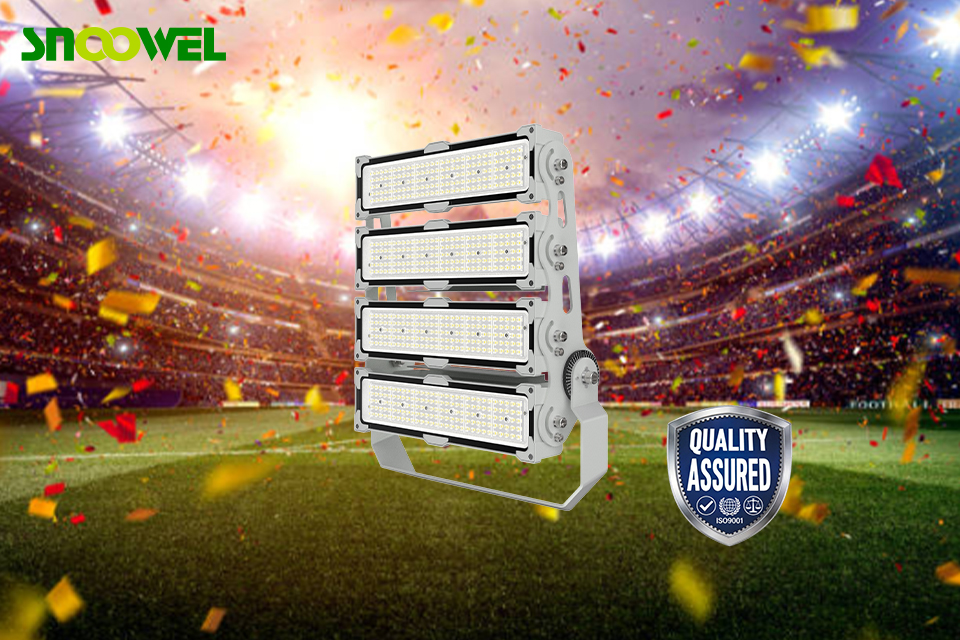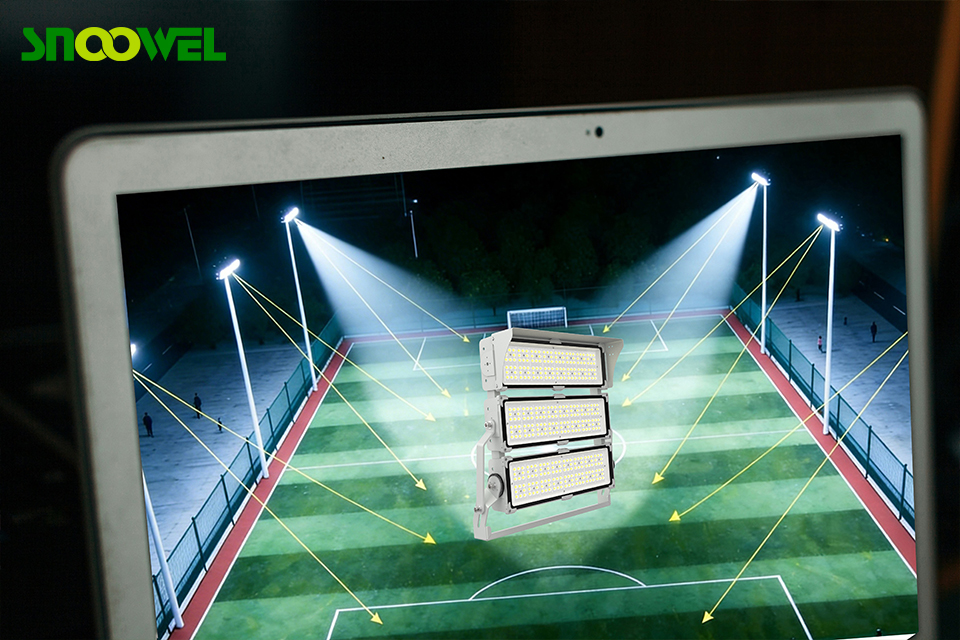
LED flicker and stroboscopic effect are important parameters to measure LED lighting quality. Often invisible to the naked eye, they are factors that directly affect visual comfort, eyesight safety and production safety. These problems are especially pronounced when LED lamps are used in industrial and outdoor environments that require long-time illumination such as warehouses, factories, tunnels, urban expressways and sports venues.
As an LED lighting manufacturer with over 15 years of experience, SNOOWEL has always regarded flicker-free and stroboscopic control as one of our key product R&D and quality inspection indicators. Here we detail what LED flicker/stroboscopic effect is, why it’s important, what international standards apply, and how it can be detected by professional instruments — as well as how we keep all of our products flicker-free and comfortable for customers worldwide.
What Are LED Flicker and Stroboscopic Effects?
Although often confused, flicker and the stroboscopic effect are related but distinct phenomena.
Flicker refers to the physical fluctuation of a light source’s luminous flux over time. In simple terms, it describes how much the brightness rises and falls. The greater the fluctuation depth, the more severe the flicker.
Stroboscopic effect refers to the negative visual and physiological impact caused by flicker. It can make moving objects appear jerky, stationary, or distorted, leading to eye fatigue, headaches, reduced concentration, and even safety risks in industrial settings.
In essence, flicker is the measurable light fluctuation, while the stroboscopic effect is how the human visual system reacts to it.
The Science Behind Flicker and Human Perception
Human sensitivity to flicker depends primarily on two parameters:
- Frequency: how fast the light output fluctuates (measured in Hertz, Hz)
- Amplitude (modulation depth): how large the brightness fluctuation is
LED flicker originates from periodic changes in current when LEDs are powered by AC or pulsed DC sources. These current variations cause corresponding changes in luminous flux, illuminance, and brightness, which the human eye and brain interpret as visual discomfort or fatigue.
This is why driver performance is critical. At SNOOWEL, high-performance constant current drivers are used across our product lines to stabilize electrical output and minimize luminous flux fluctuations.
Visible Flicker vs. Invisible Stroboscopic Effects
LED flicker is typically classified based on frequency:
- Visible flicker (<100Hz)
Clearly perceived by the human eye as brightness fluctuation or strobing. - Invisible flicker / stroboscopic effect (100–500Hz)
Not consciously visible, but still capable of causing eye strain, headaches, and reduced task performance over time.
Although the light may appear stable, invisible flicker remains a serious concern in long-duration lighting applications, making professional testing essential.
International Standards and Allowable Flicker Ranges
To protect visual health, industry standards define acceptable flicker limits. SNOOWEL strictly follows ENERGY STAR (Lamps V1.0 draft) and related international guidelines:
- Flicker frequency must be ≥120Hz
- For frequencies between 120Hz and 800Hz:
F1 < 0.001 × frequency - For frequencies >800Hz:
No specific F1 requirement - If frequency is uncertain:
Power factor (PF) < 30%
These criteria ensure LED luminaires operate within safe and comfortable flicker ranges. As a global LED supplier, SNOOWEL ensures all products comply with local laws, regulations, and certification requirements in the markets we serve.
Professional Methods for Detecting LED Flicker
Flicker detection focuses on measuring luminous flux or brightness changes over time under controlled conditions. Professional testing follows standards such as LM-79-08, which governs LED photometric measurements.
1. Required Testing Equipment
- Power supply and measurement instruments compliant with LM-79-08
- Multi-channel oscilloscope with storage function
- Sampling rate >2kHz
- Sampling duration >100ms
- Photometric probe with V(λ) correction and compliant response time
- Integrating sphere for absolute photometric measurement (used in SNOOWEL’s QC laboratory)
2. Measurement Conditions
- Ambient temperature controlled at 25 ± 5°C
- Compact fluorescent lamps (if included in system testing) must be aged and preheated
- LED luminaires do not require aging but must be tested under stable environmental conditions
Collected data is analyzed to generate brightness fluctuation curves, from which flicker frequency and modulation depth are calculated.
How SNOOWEL Ensures Flicker-Free LED Lighting
For SNOOWEL, flicker control is not optional—it is a fundamental measure of engineering quality.
Advanced R&D and Patented Technology
Our dedicated R&D team continuously optimizes LED driver design, current regulation, and component matching. Many of these innovations are protected by product and technology patents focused on stability, energy efficiency, and visual comfort.
Premium Component Selection
We use high-quality drivers and LED light sources with consistent electrical characteristics, ensuring stable operation in demanding industrial and outdoor environments.
Strict Quality Control
Every SNOOWEL product undergoes comprehensive QC testing, including flicker and luminous flux verification, before shipment. This ensures compliance with ENERGY STAR and other international standards.
Application-Focused Engineering
From LED high bay lights and street lights to flood lights, our products are designed to deliver stable, comfortable illumination even during long operating hours.
LED flicker and strobe effects aren’t just boring specs. They impact customer comfort, productivity and safety. Learn about the causes of flicker, how it’s measured and how it can be mitigated so you can buy confidently.
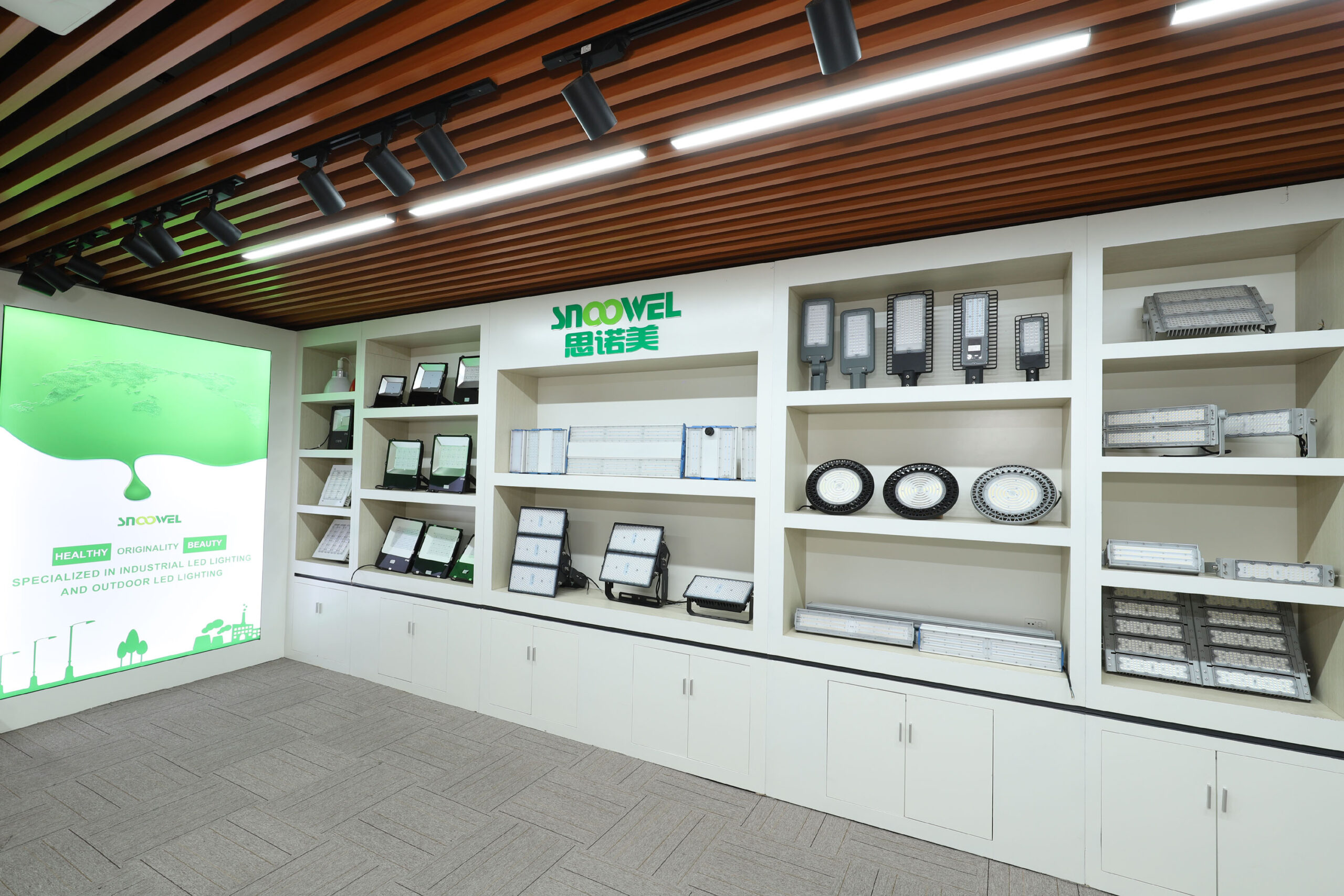
Since 2008, SNOOWEL has been committed to delivering high-end industrial and outdoor LED lighting that is not only energy-efficient and durable, but also visually stable and comfortable. Our vision is to be a continual trailblazer in LED innovation and your long-term partner in reliable lighting solutions.
Choose SNOOWEL for LED lighting that is flicker-controlled, standards-compliant, and engineered for long-term visual comfort and performance.